
MXT Cyber-Physical Injection Device
2024
In this project I led the end-to-end development of a novel electromechanical injection device from failed prior prototypes to three functional units delivered under a controlled budget. I authored the Functional Requirements Document, decomposed the system into mechanical, fluid, controls, and enclosure subsystems, scoped specialist work through tightly defined SOWs, and coordinated integration and field validation.
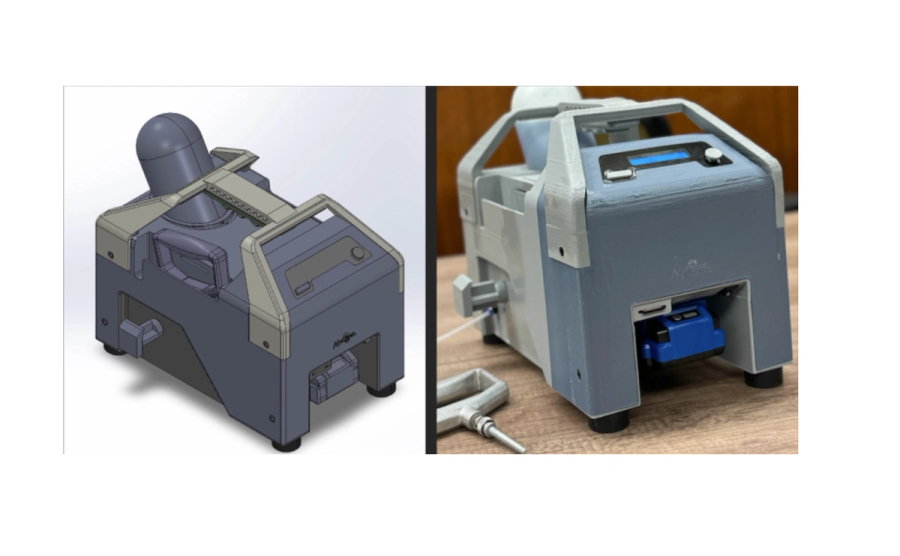
From Prototype Failure to Functional Injection Device (MXT)
Overview
Delivered three functional prototypes under a controlled architecture and budget, replacing trial-and-error with a requirements-driven, test-validated development process. Product development flow for a field injection device: requirements → design → prototyping → field testing → prototype handoff.
A prior pneumatic metal prototype was nonfunctional, with multiple student-made 3D-printed parts exhibiting major defects; prior efforts involved expensive trial-and-error with limited progress and unclear requirements alignment.
Core Problem
Repeated trial-and-error and vendor churn without a shared definition of success (functional requirements), controlled scope, or a disciplined system architecture to manage budget, quality, and integration risk.
Solution
Define the device's functional truth (FRD) and make a set of architecture decisions that control performance, usability, and cost—then execute through scoped SOWs and validation checkpoints.
Intervention as the PM
As the PM I entered after prior prototype attempts failed to meet functional needs. We created a detailed Functional Requirements Document (FRD) defining end-to-end use cases (injection, priming, charging, maintenance, and edge cases) and aligned stakeholders on this as the operating truth. We built a budget and cashflow/NPV framing to manage development under constraints (including warranty/defect considerations). We decomposed the system into electromechanical, fluid handling, and enclosure subsystems; wrote tightly scoped Statements of Work (SOWs) for highly specialized engineers; established communication and integration protocols; and coordinated design/testing cycles to deliver three functional prototypes.
- Functional Requirements Document (FRD) agreed as source of truth
- Budget control using cashflow/NPV framing and explicit scope boundaries
- Subsystem decomposition (electromechanical, fluid handling, enclosure)
- Clear SOWs for specialist engineers with defined deliverables and budgets
- Integrated features beyond basic injection (logging/file transfer vision, battery approach, UI/menu, control logic)
Validation
Validated prototypes through practical field testing (injections into real tree stumps and live trees), drop testing, and stress/strength analysis for critical mechanical parts (handle/needle). Measured human force requirements using a test apparatus to inform design constraints. Reliability/accelerated life testing was not performed beyond prototype scope.
Sustainability was enforced through FRD-based change control, scoped SOW execution, documented decisions, disciplined integration checkpoints, and complete end-of-project accounting (balanced budgets, paid vendors, documented handoff).
Impact Metrics
budget ≈$120K
~3× Prototypes delivered
duration: 4-month